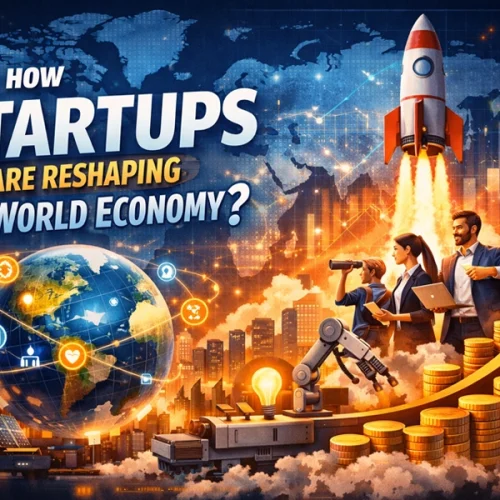
There was a time when “startups” referred to small businesses operating in garages or co-working spaces. Nowadays, however, startups represent a new way of doing business that leverages innovation and economic transformation. They have changed how we interact with the world around us through the products and services we use (e.g., the applications on our phones), as well as how we conduct business with each other through shopping & travel, etc., without most people noticing it happening.
In terms of their impact on the economy, what is it about these emerging companies that causes them to have such a meaningful effect? Furthermore, why are they critical to job growth, new technology development, and new ways to do business in the future? Let’s examine this further.
The Rise Of Startups In The Modern Economy
Historically, the large corporations were the dominant players in the market. Large amounts of capital were usually required in order to start a business, as well as a physical location where the business would be conducted. However, these measures are no longer necessary in today’s world as there are many startups emerging daily because of the access provided to business owners through the internet, online business tools, and other digital means to access customers or suppliers to successfully run their businesses.
The number of startups is rising faster than previously due to their reliance on technology, including industries such as finance, healthcare, and e-commerce. Most major cities across the globe have become entrepreneurship hubs, creating growth opportunities for investors, talent, and innovation. Popular companies such as Uber, Airbnb, and Spotify all began as startups but now represent new ways of doing business that have changed entire industries due their innovation and growth.
This trend has created an environment of increased competition and flexibility within the global marketplace unlike we have ever had to deal with previously.
How Startups Drive Innovation And Technology
While traditional corporations may take substantial time to implement new innovations due to their size, bureaucracies and complexity, Start-Ups can rapidly develop and release new products / services because they do not operate under large organizations. Thus, they are more adept at trying new ideas on trial and error basis.
Start-Ups can be compared to Speedboats, while traditional corporations can be compared to Oil Tankers. Oil Tankers have substantial mass but are not very good at changing direction; therefore, the Speedboat can develop and sell its product(s)/service(s) at a much faster pace than the Oil Tanker.
Regardless of the type of innovation, start-ups continue to redefine what is possible via technological development (for instance, artificial intelligence, fintech applications, and renewable energy solutions), which has created challenges for larger corporations to keep pace with the changes. Ultimately, when larger companies are forced to change due to the possibility of competition from start-ups, the benefits are passed on to consumers (the average individual in society).
Job Creation And New Opportunities
Start-ups generate a great deal of employment as well as large corporations by creating new businesses throughout their life cycle. By providing many of the employees with a variety of different types of work anc businesses all over the world.
As a start-up acquires more resources and expands into new areas, the employment of people in its jobs will occur through the employment of others for these jobs.
When a start-up creates jobs, these new jobs will start creating jobs indirectly with the expansion of the supply chain operations, and other relationships with employers.
Start- ups also foster an environment that provides the opportunity for individuals who do not naturally fit into the traditional corporate world: creating remote work opportunities, freelance work opportunities, creating a place to work where all employees have access to flexible work arrangements, and developing a new way of working, where companies are becoming virtual companies.
Disrupting Traditional Industries
Startups don’t just enter the marketplace—they frequently rewrite the rules of the industry. The term for this is “disruption,” as new companies develop new methods for performing existing tasks to be quicker and/or cheaper.
For instance, the introduction of streaming services disrupted traditional programming, while the introduction of ride-sharing options changed the way we use taxis. The nature of the change may appear abrupt, but typically the initial idea arises from a small company that identifies a challenge that no one else has acknowledged.
Although disruption is frequently uncomfortable for well-established businesses, it frequently results in a greater variety of choices, a lower price, and better quality products for the consumer. In the end, disruption makes the overall economy more efficient and more consumer-centric.
Global Competition And Economic Growth
The global economy has never been as connected as it is today, because of how connected the world is through technology. This means that a small business in one nation can reach customers all over the globe, thanks to digital technologies.
Startups in all countries create more competition around the world, forcing all businesses to work on producing better quality products for less money. Many of the countries that provide support to new ventures, such as providing access to funding and coaching, and create a more friendly environment to create a business, experience quicker rates of economic growth.
Startups in developing countries can often create a similar opportunity to developing companies, by giving them the ability to use a digital solution to “leap frog” the traditional phase of development and compete on a global scale without needing to have developed the traditional method of development of building physical infrastructure first.
Challenges Startups Face
Although Startups can reshape economies, Startups don’t have an easy path. Many Startups go under during their first few years. Startups face many of the same obstacles, including but not limited to:
- Limited Capital
- Competition
- Staggering Changes in the Market
- Government Regulations
An entrepreneur needs to feel as if he or she is running a Steeplechase, as you will be confronted with obstacles during the course of your Startups growth stage. You will be required to have a balance between innovation, finances, managing your employees and meeting your customers’ expectations. Each one of these areas (made worse by only one mistake) could create a devastating impact to your Startups’ success.
Even though there are risks associated with starting a Startup, the potential to create wealth as well as societal benefits will continue motivating entrepreneurs to risk it all.
What The Future Holds For Startups
Going forward, we can expect startups to have an increasingly significant impact on the economy of the world. With technologies like AI, blockchain and renewable energy emerging, there are many opportunities for entrepreneurs.
Additionally, there are more systems of support for startups, such as incubators, accelerators and venture capitalists. The government is beginning to see that by supporting startups they can invest in economic growth and innovation.
As more young people become entrepreneurs rather than taking on “conventional” jobs, we can expect the startup ecosystem to grow even larger and create more innovative solutions to major global problems such as climate change, access to healthcare and financial inclusion.
Conclusion
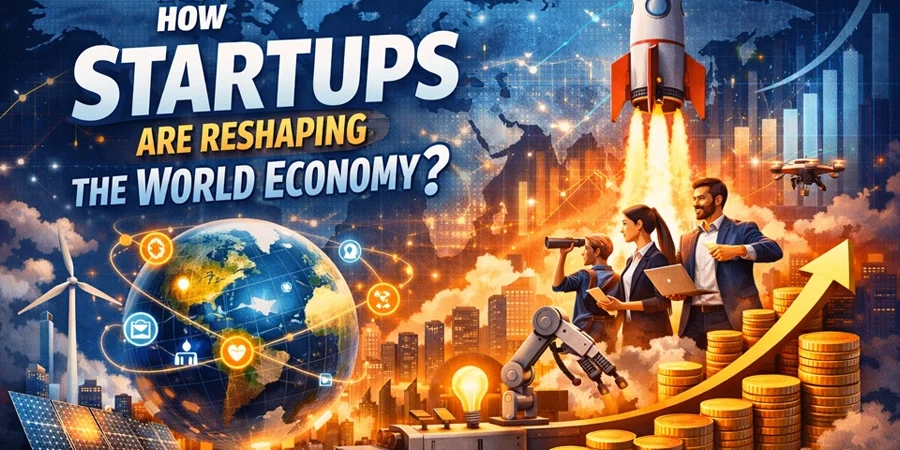
Small amounts of startup firms can provide great value to the world economy. They promote innovation, help create jobs, exist to disrupt old ways of doing things, and help create change in every industry. They generate the spark for the economic engine of the world to run.
The next time you use a new app, buy something online or pay for something online, you probably are receiving value from a startup. Perhaps one of the new companies that could create a new World Economic Order or improve upon the current economic order will be distributed from a small office or a bedroom as we look back on history.