


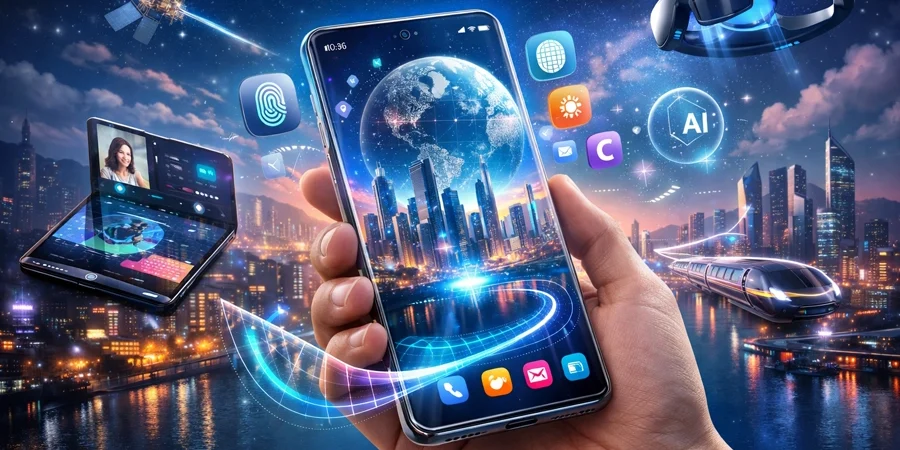
Smartphones have become extremely commonplace in our daily lives; we now rarely take the time to consider the rapid pace at which they have evolved. Less than 10 years ago, many had physical keyboards on their phones. Today, the vast majority of phones use touchscreen technology instead. So what might be next after touchscreens? As technology continues to progress, both manufacturers and researchers are currently developing other ways for people to interact with their devices and that could potentially make using the ‘tap’ or ‘swipe’ motions look as obsolete as using a flip phone.
1. The Limits Of Touchscreen Technology
When touchscreen technology was first invented, it completely changed how we use mobile phones. We went from having multiple buttons on a phone to a single physical button and all of the other functionality of a phone was accessible through the touchscreen. Although this was a revolutionary change, there are many drawbacks to using touchscreens. For example, touchscreens can become smeared or dirty and accidental touches occur frequently. In addition, using a phone outside in the rain or when wearing gloves makes it difficult to utilize touchscreens. Finally, because you have to use your eyes to view your touchscreen device, using your telephone while driving is incredibly dangerous because you can’t see the road while looking at your screen.
Touchscreens represent a transition from the engineering of old technology and serve as a bridge to new engineering designs and the next innovations in smartphones extending well beyond simple tap and swipe interaction.
2. Voice Control: Talking To Your Phone Naturally
How Voice Assistants Are Evolving
Voice commands are becoming more common in smartphones with capabilities similar to a conversation with a friend. Rather than having to enter short, specific commands to the smartphone, the technology will eventually support natural conversation style interaction.
This will allow us to access all of the information we currently receive via text or touch without performing any action on the device, such as sending a message, getting the temperature, and creating a calendar event.
Why Voice Could Replace Many Touch Functions
One of the greatest benefits of voice interaction is that it will allow us to perform actions on our smartphones when both of our hands are occupied. Examples include cooking, driving, or carrying something in one or both hands. Since voice recognition continues to improve with time, it is very likely that many of us will be able to use voice command to complete most of our daily tasks without using our hands.
3. Gesture-Based Interaction: Controlling Without Touch
What Are Gesture Controls?
The concept of gesture control means that instead of touching your smartphone, you can control it through your hands. Some smartphones already have basic functions of gesture controls such as silencing an incoming phone call by waving your hand in front of the phone; or changing music tracks by swiping through the air in front of your phone screen.
The Future Of Gesture Technology
In the future, gesture-based controls on smartphones could be developed further. For example, you could scroll through your social media feeds simply by moving your hand in front of you in the air, or you could answer a phone call simply by waving your hand in front of you. This would feel very much like magic, and would be similar to scenes in science fiction films where characters are able to perform tasks like controlling a computer screen, using gestures with their hands.
Being able to interact with a smartphone using gestures will help keep our phones cleaner (since there will be less contact with the touchscreen), allow for a more user-friendly experience for everyone (including people with disabilities), and help streamline the overall smartphone experience.
4. Augmented Reality And Holographic Displays
Beyond Flat Screens
One of the greatest innovations that could change the face of mobile technology is augmented reality and holographic displays on smart phones! Rather than simply being viewed on a flat surface, you will soon have the ability to see applications and information in a 3D space around you.
How AR Could Change Everyday Use
Using augmented reality glasses or phones with holographic displays, you will be able to see videos, play games, and attend meetings as if they are actually happening in your home. Therefore, you will no longer use your phone for only communication purposes; it will be an entry point to another level of digital reality superimposed on the real world.
This new design will also allow you to use your mobile device in more of a hands-on way, as opposed to just looking into a box (screen).
5. Brain-Computer Interfaces: Thinking Instead Of Tapping
What Is A Brain-Computer Interface?
A brain-computer interface (BCI) enables an electronic device to receive signals from a person’s brain and translate these signals into commands. This might seem futuristic; however, many companies and researchers have developed and tested prototypes of BCIs.
How This Could Change Smartphone Use?
Imagine unlocking your smartphone, sending text messages, or opening apps simply by imagining you have completed these actions. No touching or verbally requesting an action; simply thinking to complete the action! Communication with technology will become as simple as communicating with someone in person, without any barriers separating you from your technological device.
Although still very much in the prototype phase, BCIs illustrate that the future of smartphones may be much more than just touchscreens!
6. Foldable And Flexible Devices: A Step Toward The Future
The Rise Of Flexible Screens
Folded mobile phones originate from an ongoing change in form factor design for all smartphone types – flexible displays permit flexibility in both folded and unwound form like books or sheets of paper.
Why This Matters For Post-Touchscreen Technology
Flexible display technology creates new opportunities for interaction between users and devices. The larger, folding screens will provide more dynamic and engaging interactions with users and can be utilized in AR, gaming, and during multi-tasking applications. Foldable display devices also offer a glimpse into a future where the physical form of our devices will be different than what we consider traditional mobile phone today.
7. Challenges And What It Means For Everyday Users
Privacy And Security Concerns
As technology continues to advance through innovations such as voice control and brain-computer interfaces, the issue of privacy becomes extremely important. If your phone is constantly listening to you or reading signals from you, how do we ensure the safety of your data? This is something that technology companies need to properly address.
Cost And Accessibility
Typically, new technologies are usually developed with high costs. Although innovations (i.e., the features of future technologies) may sound very unique, they are not truly going to be able to change the world unless they become affordable and accessible to everyone.
Conclusion
The path of future smartphones is towards an increased ability for users to interact naturally through voice commands and gestures as well as through advanced technologies such as holograms or brain-controlled devices. Overall, users will be able to communicate more quickly, efficiently, and intuitively with their phones in the future. Touchscreens were just one jump forward in terms of technology – they represent merely a chapter in a larger book.
In other words: if smartphones are comparable to tools, touchscreens represent only the handles we have used thus far. Future technologies will work towards eliminating the need for users to even use a handle to handle their devices; therefore, instead of touching or tapping on a touchscreen, future generations will use only voice and/or body movements to perform tasks with their devices. The real issue is not whether or not touchscreens will go away – it is when we will be ready to stop using them altogether?